
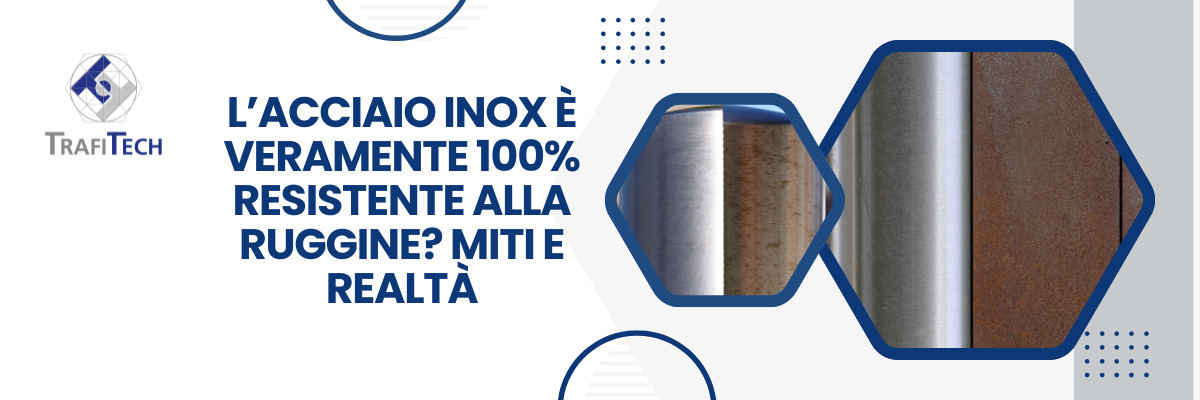
L’acciaio inox è veramente 100% resistente alla ruggine? Miti e realtà
Stainless steel, or inox steel , is universally recognized as a top-quality material, used in many industries for its excellent resistance to corrosion and rust. This makes it indispensable in applications ranging from the food, chemical, and pharmaceutical industries, to the construction and architectural sectors, and even the naval and automotive industries.
However, is it really true to say that stainless steel is 100% rustproof ? This claim, which is widespread even among non-experts, requires a more in-depth technical analysis. In this article, we’ll look at the strengths and limitations of stainless steel, how its corrosion resistance works, and under what conditions rust can still form.
We’ll also discuss the added value offered by TrafiTech SRL , an Italian company with over 30 years of experience, producing top-quality stainless steel bars and wire rods using cutting-edge production processes and rigorous controls compliant with European standards.
What is stainless steel? General characteristics
Stainless steel is a steel alloy containing at least 10.5% chromium , a key element that gives the material the ability to form a protective passive layer on the surface. This thin film of chromium oxide prevents oxygen and moisture from penetrating the metal’s structure, limiting the formation of iron oxides, or rust.
The main characteristics of stainless steel are:
- High resistance to corrosion and oxidation
- Good mechanical resistance
- Shiny and uniform aesthetic appearance
- Ease of cleaning and maintenance
Corrosion Resistance: How Does It Really Work?
Stainless steel’s corrosion resistance is primarily based on a passive layer of chromium oxide , which regenerates automatically in the presence of oxygen. This process allows stainless steel to maintain its integrity even in humid or aggressive environments.
However, this resistance is not absolute or unlimited. Under certain conditions, the passive layer can be compromised, leading to the formation of rust or other types of corrosion.
When can stainless steel rust?
Despite its fame, stainless steel is not completely immune to rust . The main causes of corrosion are:
- Environments with high chloride levels , such as seawater or chemicals containing chloride (salt). Chlorides can attack the passive layer and cause localized corrosion, such as crevice corrosion or pitting corrosion.
- Lack of oxygen in some narrow or poorly ventilated areas, which prevents the regeneration of the protective layer.
- Aggressive air pollution , for example in the presence of industrial agents or in very humid areas.
- Poor maintenance and cleaning , which can promote the formation of corrosive deposits on the surface.
Types of stainless steel and their resistance
Not all stainless steels are the same. There are different families, each with specific corrosion resistance characteristics:
- Stainless steel (300 series, e.g. AISI 304, AISI 316) : Excellent overall strength, with 316 offering greater protection in marine environments due to the molybdenum.
- Ferritic and martensitic stainless steel : generally less resistant to corrosion, used in less critical applications.
For particularly aggressive environments, such as marine or chemical environments, the use of specific stainless steels, produced with a high molybdenum content and certified according to the relevant EN standards, is recommended.
European regulations and standards for stainless steel
In Italy and Europe, the production and certification of stainless steel are regulated by standards such as:
- EN 10088 (series of standards for stainless steels)
- UNI EN ISO 9001 for manufacturers’ quality management systems
- European Construction Products Directive (CPR)
Regulations ensure that stainless steel products meet stringent requirements for chemical composition, corrosion resistance, and mechanical performance.
The added value of TrafiTech SRL
In the Italian market, quality and safety are paramount. TrafiTech SRL , with over 30 years of experience, stands out for its production of stainless steel bars and wire rods made to the highest European standards. Thanks to modern facilities and rigorous quality controls, TrafiTech SRL guarantees reliable and long-lasting products, suitable for numerous applications: construction, food, pharmaceutical, chemical, and architectural industries.
Bottom Line: Is Stainless Steel 100% Rustproof?
In short, stainless steel is among the most corrosion-resistant materials available on the market, but it is not completely immune to rust under all conditions. Its effectiveness depends on:
- Specific composition of the alloy
- Environmental conditions of use
- Maintenance and care over time
Relying on high-quality products, such as those from TrafiTech SRL , guarantees the highest level of protection and durability over time, minimizing the risk of corrosion and maintaining the aesthetic and mechanical properties unchanged.
 Italian
  English
Post a comment